Nobody Asked for a Conference App. He Built One Anyway.
The first signal was when customers started explaining our value better than we did.
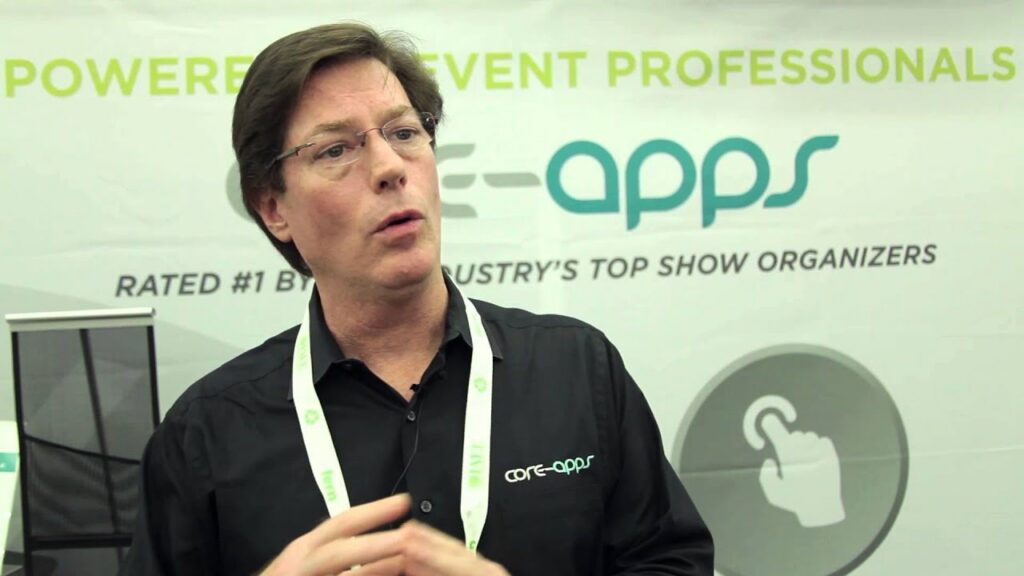
Founder & CEO, NoteAffect
Twenty years ago, if you went to a conference, somebody handed you a printed program book. They often ran past 300 pages. When a room changed or a speaker pulled out, the organisers scrambled to print inserts or tape correction sheets over the old schedule.
“It was simply the way the industry worked,” Jay Tokosch says. “Most people accepted it. I didn’t.”
What he did next is the thing worth paying attention to, because he was not responding to a request. Nobody had asked him for a mobile event app.
“At the time, organizers weren’t asking for mobile event apps because they had never experienced one. If I had built only what customers were requesting, Core-apps would never have existed.”
He built for where he thought the market was going instead. Eventually it got there, and Core-apps was acquired.
Twenty years later he went looking for the same kind of gap, and found it somewhere unfashionable. Everyone around him was building AI that helped people produce more: write faster, generate more, automate more.
“We don’t suffer from a lack of information,” he says. “We suffer from remembering it.”
That became NoteAffect, his seventh company.
Customers reveal the problem, founders recognise the future
The mistake he sees most often is a piece of advice almost everyone repeats approvingly.
“One of the biggest mistakes I see founders make is asking customers what they want.”
His objection is not that customers lie. It is that they are being asked the wrong question. “Customers are incredibly good at describing today’s frustrations. They’re much less effective at imagining tomorrow’s solutions.”
Ask executives whether they need an enterprise memory platform and almost none will say yes, because that is not a thing they have words for. Ask them what is going wrong and the answers arrive immediately: teams spend too long hunting for information, employees repeat mistakes, knowledge walks out of the door with people who leave, training does not stick.
“Customers reveal the problem. Founders recognize where the world is going.”
He is careful about where that licence ends, which is the part founders usually skip. Conviction applies to the destination, not to the route.
“Your vision should be stubborn, but your execution should be flexible. We never changed where we believed the market was going. What changed constantly was how we helped customers get there.”
Put another way: “don’t confuse customer feedback with customer direction.”
Technology is rarely the innovation
For someone who has spent decades in software, he is unsentimental about it.
“Technology itself almost never creates a market. Behavior does.”
He watches founders fall in love with impressive technology constantly, and thinks they have mistaken the enabler for the product. “Customers don’t buy technology. They buy better outcomes.” The companies that win are not the ones with the most advanced stack but the ones that understand where friction sits in somebody’s day and how that is shifting.
Which leads to a sentence worth pinning somewhere.
“That’s why I spend more time studying people than I do studying technology. Technology changes every year. Human behavior changes much more slowly.”
The signals everyone overlooks
Asked how he knew fit was arriving, he puts revenue and growth second. They mattered, but they were not what told him first.
“The first signal was when customers started explaining our value better than we did.”
The second was a change in the question being asked. Prospects stopped saying “what is this?” and started saying “how quickly can we use it?”
The third was partners wanting to attach themselves, because they had worked out where the industry was heading. And the fourth, the one most founders experience as bad news, he reads as confirmation.
“Perhaps the biggest signal of all was when competitors started moving in the same direction. That’s usually when you realize you’re no longer pushing an idea uphill.”
Knowledge retention equals revenue
The sharpest commercial argument he makes has nothing to do with education technology, and it came out of a project with a plumbing supply company. Plumbers watched on-demand content about the company’s products and earned points for merchandise. What NoteAffect added was retention. The plumbers then bought more.
He explains why with an example anyone can test against their own behaviour.
“If you go into a store and you need to buy a new refrigerator, and the salesperson talks to you about two different refrigerators, but he educates you on refrigerator A as opposed to refrigerator B. They’re the same price, they look the same, just two different manufacturers. If you’re educated on product A over product B, what product are you going to buy?”
The same logic runs through laptops, and through the drain pipes his client actually sells. “If I get educated on everything from company A, what am I buying? I’m buying A. It’s really simple.”
So customer education is not a service wrapped around the product. It is the mechanism by which the product gets chosen. And if that is true, then how much a customer still understands next month is a commercial metric rather than a soft one.
“Knowledge retention equals revenue.”
Fit is a milestone, not a finish line
His view of product-market fit is that most founders aim at it too squarely.
“Product market fit is simply the point where the market begins catching up to the future you’ve been building. If your ambition is only to achieve product market fit, you’ll probably build a better version of something that already exists.”
That shapes where he starts. Both companies entered through a narrow market chosen for proof rather than for size. Core-apps earned credibility one event at a time until the industry began expecting mobile. NoteAffect went into events because they generate thousands of live learning moments, and that has opened doors into enterprise, healthcare, workforce development and associations.
“Sometimes your first market isn’t your biggest market. It’s simply the best place to prove your vision.”
Asked what he wishes he had understood earlier, he does not name a tactic.
“I probably spent too much time trying to convince people with technology instead of business outcomes. Customers rarely buy innovation because it’s impressive. They buy it because it solves a problem they care about today.”
And the habit underneath all of it, after two companies built the same way:
“Don’t spend all your time looking for a market. Look for change. Pay attention to how people are behaving differently, what technologies are reshaping expectations, and where today’s frustrations are pointing tomorrow.”
-
№ 01Customers describe today's frustrations well and tomorrow's solutions badly. Ask what is going wrong, then work out what it points to yourself.
-
№ 02Be stubborn about where you are heading and flexible about how you get there. Jay never changed the destination for either company, only the route.
-
№ 03Watch for the moment customers start explaining your value better than you do. That arrives before the revenue does.
-
№ 04Educating a customer is how the sale gets made. Given two identical products, people buy the one they understand.
-
№ 05Choose a first market for proof rather than for size. Core-apps earned credibility one event at a time before the industry caught up.
Jay Tokosch
Jay Tokosch is the founder and CEO of NoteAffect, a platform that captures what is presented in a room and matches it to each person's own notes and the recorded audio, so a session can be revisited rather than half-remembered. Based in Maryland, he is a serial founder on his seventh company. His previous venture, Core-apps, brought mobile apps to the conference and trade show industry years before organisers were asking for them, and was acquired.